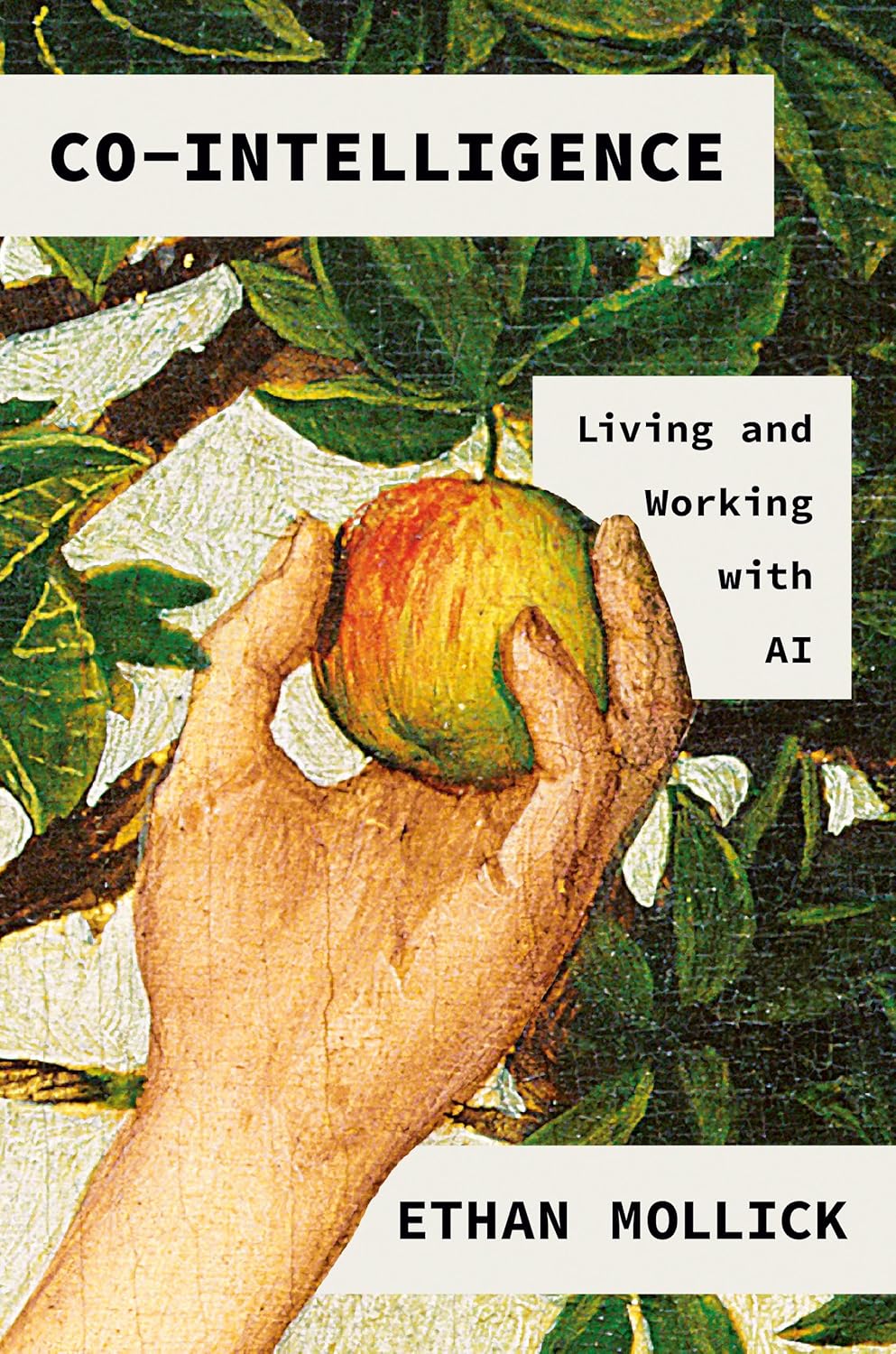
Co-Intelligence
Work with AI on purpose: decide the role, set the rules, measure the result.
Essence (why this landed for me)
A clean starting map for applied AI. It explains how to think with models instead of only about them, and turns big ideas into small habits I can practice. Helpful for someone new to AI who wants the basics of prompting, testing, and guardrails without the noise. It fits my belief that the opportunity is in application.
Insights (mapped to mental models)
Takeaways grouped by mental models, with a short action you can use now.
Decide the AI’s job before you start
Good prompts are processes you can rerun
Iterate with fast feedback to raise quality
Use multiple perspectives to reduce blind spots
Ground answers in sources you trust
Evaluate outputs with simple, repeatable checks
Keep a human in the loop where stakes are high
Pick the tool that fits the task at hand
Chain smaller tasks instead of asking for magic
Use exemplars to teach style and structure
Ask for uncertainty to expose weak areas
Red-team your own prompts
Keep a small library of reusable workflows
Track the value a workflow actually delivers
Absorption Notes (short essay)
Treat the model as a teammate. Write its role, goal, inputs, and done-definition. Start with a small example, then loop: draft, critique, revise. Attach trusted context when accuracy matters. Use a simple rubric to score usefulness so changes can be compared. Keep the high-stakes handoff human and feed errors back into the prompt or workflow. Build a tiny library of prompt templates for common jobs: plan, summarize, critique, generate options, rewrite for audience. Split big work into steps and track one metric that shows real value, like time saved or defect rate. When something breaks, red-team the prompt and fix the process first, then the wording. Calm, steady improvement.
Reflection Prompts (product × design × engineering)
Questions to apply the ideas across projects. Pick one or two and use them today.
Role first
What job is the model doing here
Role ClarityName it.
Context
What trusted sources should I attach
Evidence FirstLink or paste.
Decompose
Which steps can I split into smaller tasks
DecompositionList three.
Rubric
How will I score usefulness or quality
Decision HygieneDefine criteria.
Loop
What is the shortest draft-critique-revise cycle I can run
Feedback LoopsOne pass.
Safety
Where do I need a human handoff
Risk ManagementDraw it.
Exemplars
What example will teach tone or structure
AnalogyInclude one.
Calibration
What uncertainty or caveats should I request
CalibrationAsk for ranges.
Red team
How could this prompt fail or be misused
Threat ModelingTest once.
Value
What real metric proves this is worth keeping
Leading IndicatorsPick one.