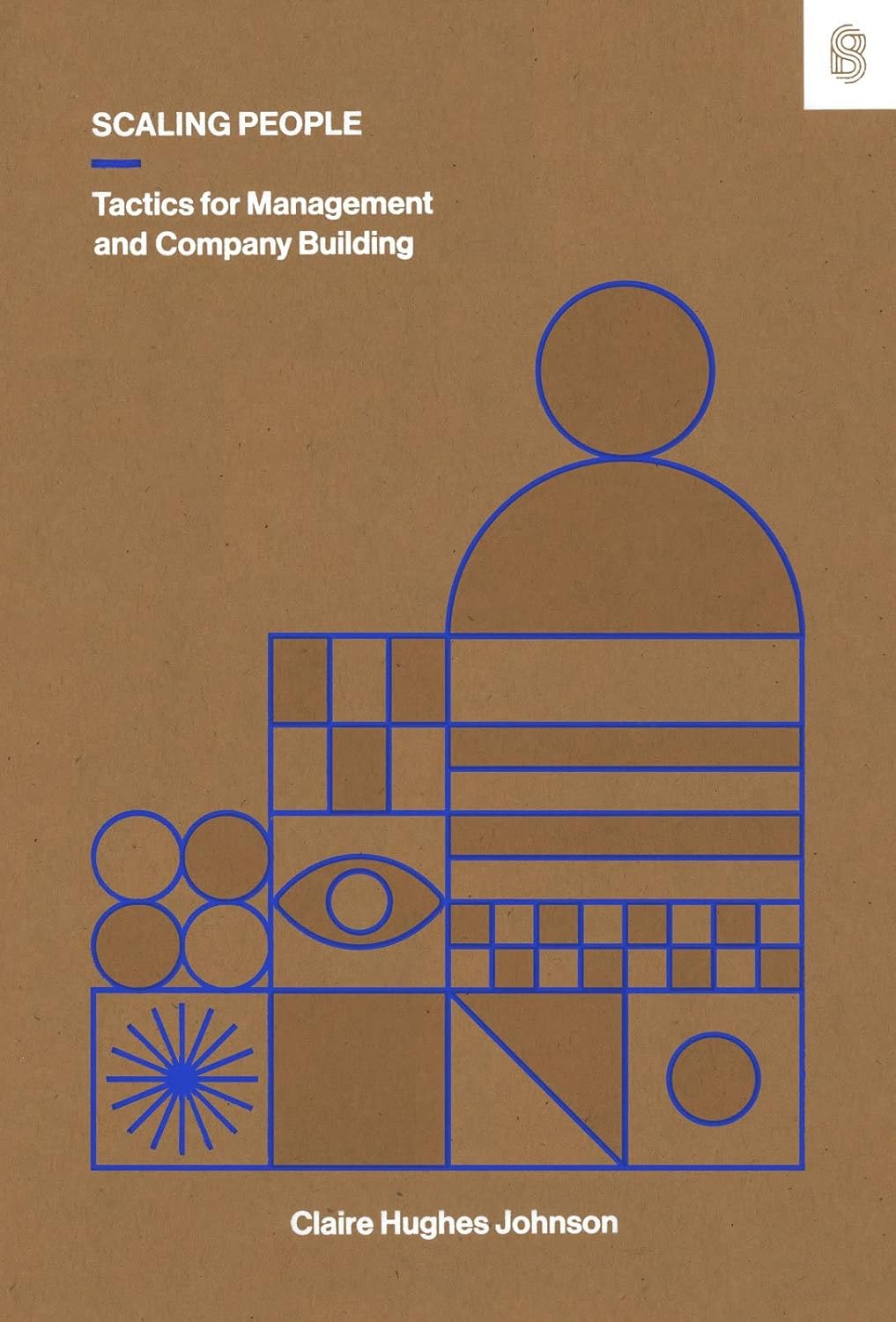
Scaling People by Claire Hughes Johnson

Scaling People

Claire Hughes Johnson

Format: Audio/Print Personal Score: 7.6 / 10

Write it down, decide who owns it, and set a steady cadence.

Essence (why this landed for me)

This is a field guide for building a team that can run without heroics. It pushes me to move from intuition to written clarity, from ad hoc to cadence, from shared vibes to explicit decision rights. The work becomes simpler when roles, principles, and rhythms are written and followed. It feels directly useful across product, design, and engineering.

Insights (mapped to mental models)

Takeaways grouped by mental models, with a short action you can use now.

Clarity scales faster than charisma

ACTION Write the operating principles.
HOW IT SHOWS UP IN THE BOOK She starts with written principles that steer decisions when you are not in the room.
MENTAL MODELS Principles, Decision Hygiene
MODEL CLUSTER Logic & Reasoning

Owners beat committees

ACTION Name a single owner.
HOW IT SHOWS UP IN THE BOOK Each project gets a directly responsible person with clear scope and authority.
MENTAL MODELS Single-threaded Owner, Accountability
MODEL CLUSTER Growth & Focus

Cadence creates compound learning

ACTION Set a weekly review.
HOW IT SHOWS UP IN THE BOOK A steady ritual for plans and metrics turns small corrections into compounding progress.
MENTAL MODELS Feedback Loops, Compounding
MODEL CLUSTER Systems & Adaptation

Write roles so people can self-serve

ACTION Publish role pages.
HOW IT SHOWS UP IN THE BOOK Explicit responsibilities reduce handoffs, confusion, and shadow work.
MENTAL MODELS Map ≠ Territory, Information Architecture
MODEL CLUSTER Logic & Reasoning

Decide once, document forever

ACTION Record the decision and why.
HOW IT SHOWS UP IN THE BOOK Decision logs keep context alive and prevent re-litigating old calls.
MENTAL MODELS Path Dependence, Second-Order Thinking
MODEL CLUSTER Human Judgment & Bias

Meetings are tools, not habitats

ACTION Give each meeting a job.
HOW IT SHOWS UP IN THE BOOK She designs meeting types with inputs, outputs, and owners.
MENTAL MODELS Process Design, Throughput
MODEL CLUSTER Systems & Adaptation

Hiring is a system, not a vibe

ACTION Use structured interviews.
HOW IT SHOWS UP IN THE BOOK Job scorecards and behavioral questions raise the hiring signal.
MENTAL MODELS Base Rates, Signal vs Noise
MODEL CLUSTER Logic & Reasoning

Raise the bar with written scorecards

ACTION Define must-haves now.
HOW IT SHOWS UP IN THE BOOK Clear criteria prevent last-minute bias and drift.
MENTAL MODELS Precommitment, Checklists
MODEL CLUSTER Human Judgment & Bias

Feedback works when it is specific and routine

ACTION Schedule short feedback loops.
HOW IT SHOWS UP IN THE BOOK Frequent, concrete notes beat annual surprises.
MENTAL MODELS Feedback Loops, Marginal Gains
MODEL CLUSTER Systems & Adaptation

Org design is product design for people

ACTION Align structure to strategy.
HOW IT SHOWS UP IN THE BOOK She maps teams to value streams to reduce cross-team friction.
MENTAL MODELS Systems Thinking, Second-Order Thinking
MODEL CLUSTER Systems & Adaptation

Decision rights beat seniority

ACTION List who decides.
HOW IT SHOWS UP IN THE BOOK RACI-like clarity keeps speed without chaos.
MENTAL MODELS Game Theory, Decision Hygiene
MODEL CLUSTER Logic & Reasoning

Plan for handoffs as design, not afterthought

ACTION Diagram the flow.
HOW IT SHOWS UP IN THE BOOK She treats cross-functional handoffs like interfaces with clear contracts.
MENTAL MODELS Interface Design, Queuing
MODEL CLUSTER Systems & Adaptation

Protect focus with explicit priorities

ACTION Name the top three.
HOW IT SHOWS UP IN THE BOOK Quarterly priorities constrain work-in-progress and reduce role conflict.
MENTAL MODELS Opportunity Cost, Focus
MODEL CLUSTER Growth & Focus

Write one-pagers to think together

ACTION Start with a brief.
HOW IT SHOWS UP IN THE BOOK Short docs align teams faster than long decks or meetings.
MENTAL MODELS Feynman Technique, Simplicity
MODEL CLUSTER Logic & Reasoning

Escalate on principles, not personalities

ACTION Tie to a principle.
HOW IT SHOWS UP IN THE BOOK Disagreements resolve faster when anchored to written principles.
MENTAL MODELS Principles, Decision Hygiene
MODEL CLUSTER Human Judgment & Bias

Risk lives at interfaces

ACTION Stress test handoffs.
HOW IT SHOWS UP IN THE BOOK She checks failure points where teams connect, not only inside teams.
MENTAL MODELS Bottleneck Theory, Redundancy
MODEL CLUSTER Systems & Adaptation

Promote for outcomes and teaching

ACTION Add a coaching bar.
HOW IT SHOWS UP IN THE BOOK Managers scale through people they grow, not tasks they hold.
MENTAL MODELS Leverage, Reputation Effects
MODEL CLUSTER Growth & Focus

Reduce WIP to raise quality

ACTION Limit active projects.
HOW IT SHOWS UP IN THE BOOK Less parallel work increases throughput and clarity.
MENTAL MODELS Queuing, Throughput
MODEL CLUSTER Systems & Adaptation

Make retros short and relentless

ACTION Ship one fix per retro.
HOW IT SHOWS UP IN THE BOOK Small, continuous improvements compound more than rare overhauls.
MENTAL MODELS Kaizen, Compounding
MODEL CLUSTER Systems & Adaptation

Absorption Notes (short essay)

Start with writing. Principles, decision rights, and roles go in the open so speed does not depend on memory or proximity. Give every recurring meeting a job and an owner. Set a simple weekly review that looks at plans, commitments, and one metric that matters. Keep a short decision log so context is easy to reuse and reversals are rare. Hire with scorecards and structured questions. Keep feedback short, specific, and on a steady rhythm. Align teams to the value stream and draw the interfaces so handoffs are predictable. Limit work-in-progress and name the top three priorities each quarter. After each retro, ship one change that improves flow. Simple moves, steady rhythm.

Reflection Prompts (product × design × engineering)

Questions to apply the ideas across projects. Pick one or two and use them today.

Owner check

Who is the single owner for this work

Single-threaded Owner

Name the DRP.

Decision rights

Who decides, who inputs, and who executes

Decision Hygiene

Write the list.

Cadence

What weekly ritual keeps this moving

Feedback Loops

Put it on calendar.

Role clarity

Is the responsibility written where anyone can find it

Information Architecture

Publish the page.

Interface risk

Where is the riskiest handoff in this flow

Bottleneck Theory

Stress test it.

Bar raising

What must-have would raise the hiring signal

Base Rates

Add to scorecard.

One-pager

Can this plan fit on one clear page

Simplicity

Write the brief.

WIP limit

What can we pause to finish faster

Queuing

Cut one stream.

Retro to action

What single fix do we ship after the retro

Kaizen

One change only.

Top three

What are the three priorities this quarter

Focus

Make them visible.