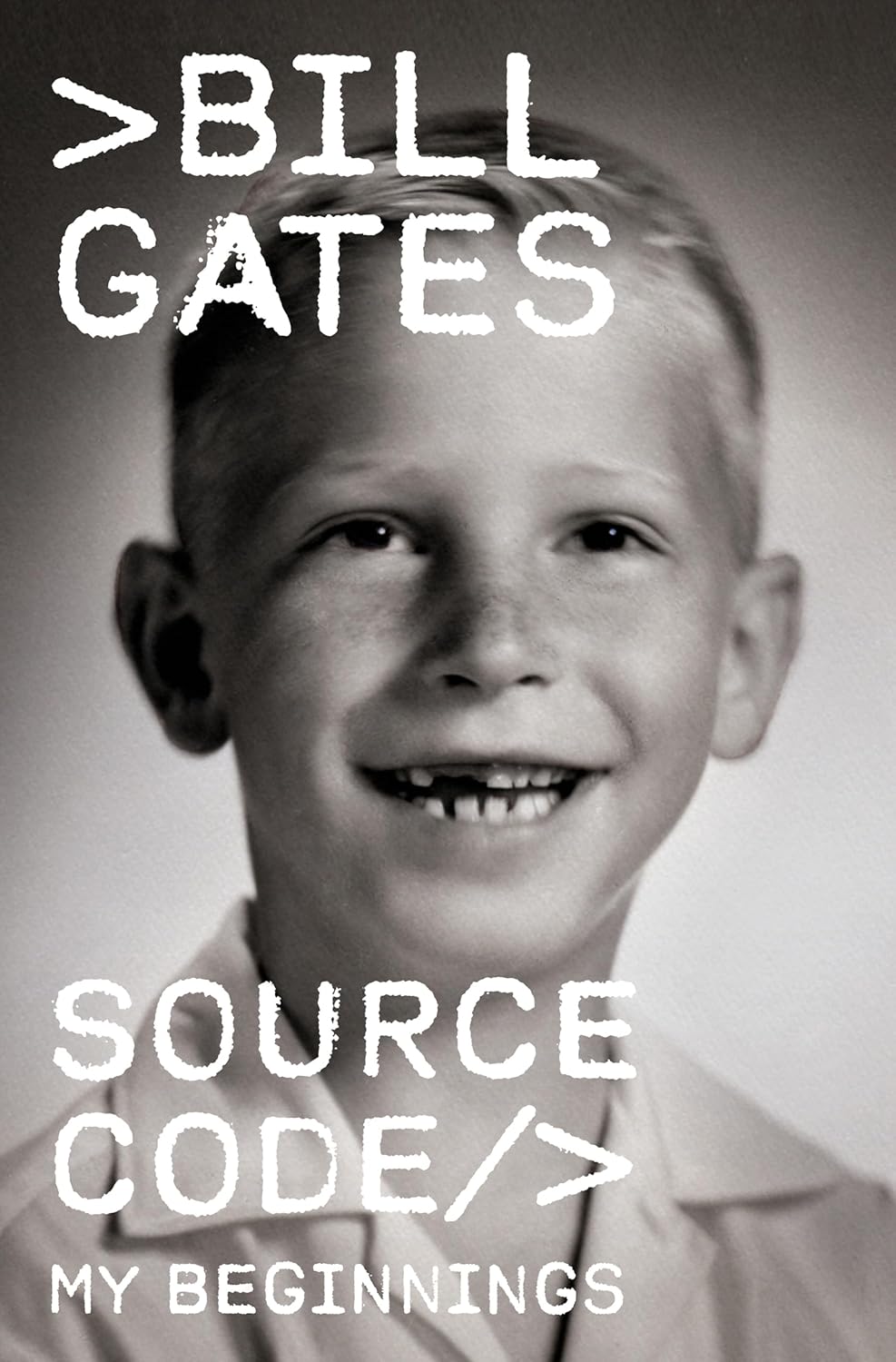
Source Code by Bill Gates

Source Code

Bill Gates

Format: Audio/Print Personal Score: 9.6 / 10

Curiosity, code, and long hours add up over time.

Essence (why this landed for me)

A close, early-life view of someone who fell in love with computing and kept going. The school labs, paper coding, late nights, and small systems that turned into bigger ones brought back my own starts. What I took from it is simple: steady curiosity plus hands-on practice plus useful projects can compound into real skill. It made me want to rebuild that rhythm.

Insights (mapped to mental models)

Takeaways grouped by mental models, with a short action you can use now.

Curiosity scales when it is scheduled daily

ACTION Block one hour to tinker.
HOW IT SHOWS UP IN THE BOOK He keeps returning to the machine, exploring what it can and cannot do.
MENTAL MODELS Curiosity Loop, Compounding
MODEL CLUSTER Growth & Focus

Constraints create better programmers

ACTION Impose one resource limit.
HOW IT SHOWS UP IN THE BOOK Tight memory, time quotas, and paper-first coding sharpened design choices.
MENTAL MODELS Constraints → Creativity, Simplicity
MODEL CLUSTER Logic & Reasoning

Write it first, then test it fast

ACTION Ship a tiny runnable.
HOW IT SHOWS UP IN THE BOOK Paper sketches turned into quick runs on shared machines to tighten the loop.
MENTAL MODELS Feedback Loops, Build–Measure–Learn
MODEL CLUSTER Systems & Adaptation

Useful beats clever

ACTION Pick a real user.
HOW IT SHOWS UP IN THE BOOK School scheduling software solved an actual headache and earned adoption.
MENTAL MODELS Jobs to Be Done, Value Proposition
MODEL CLUSTER Growth & Focus

Small systems teach big lessons

ACTION Finish a tiny tool.
HOW IT SHOWS UP IN THE BOOK Utilities and simple programs created proof, confidence, and next steps.
MENTAL MODELS Marginal Gains, Optionality
MODEL CLUSTER Growth & Focus

Read code like a book

ACTION Study one codebase.
HOW IT SHOWS UP IN THE BOOK Learning from existing programs improved style, structure, and speed.
MENTAL MODELS Reverse Engineering, Feynman Technique
MODEL CLUSTER Logic & Reasoning

Partnership multiplies output

ACTION Pair on one problem.
HOW IT SHOWS UP IN THE BOOK Collaborations split roles, raised standards, and unlocked bigger aims.
MENTAL MODELS Comparative Advantage, Leverage
MODEL CLUSTER Growth & Focus

Platform thinking outlives one project

ACTION Generalize one module.
HOW IT SHOWS UP IN THE BOOK Building reusable pieces turned one-off work into repeatable wins.
MENTAL MODELS Abstraction, Systems Thinking
MODEL CLUSTER Systems & Adaptation

Path dependence is real, choose early moves well

ACTION Slow the irreversible.
HOW IT SHOWS UP IN THE BOOK Early language, tool, and partner choices shaped future options.
MENTAL MODELS Path Dependence, Second-Order Thinking
MODEL CLUSTER Human Judgment & Bias

Distribution is part of the design

ACTION Plan the handoff.
HOW IT SHOWS UP IN THE BOOK Getting software into other hands required docs, reliability, and support.
MENTAL MODELS Second-Order Thinking, Interface Design
MODEL CLUSTER Systems & Adaptation

Compounding comes from long games

ACTION Keep a 3-year arc.
HOW IT SHOWS UP IN THE BOOK Staying near computers and projects for years built uncommon skill.
MENTAL MODELS Compounding, Deliberate Practice
MODEL CLUSTER Growth & Focus

Debugging is a thinking tool

ACTION Log the failure path.
HOW IT SHOWS UP IN THE BOOK Systematic tracing improved both program and mental model.
MENTAL MODELS Map ≠ Territory, Error Minimization
MODEL CLUSTER Logic & Reasoning

Own the learning loop you rely on

ACTION Control one key layer.
HOW IT SHOWS UP IN THE BOOK Access to machines, tools, and source created faster feedback.
MENTAL MODELS Vertical Integration, Leverage Points
MODEL CLUSTER Growth & Focus

Ambition plus service earns adoption

ACTION State the user win.
HOW IT SHOWS UP IN THE BOOK Ambitious goals were tied to clear benefits for real users.
MENTAL MODELS Incentives, Reputation Effects
MODEL CLUSTER Human Judgment & Bias

Absorption Notes (short essay)

Rebuild the early rhythm. Keep a daily block to code or explore. Start on paper or in a small scratch file, then run a tiny version to get feedback. Pick projects that help real users. Aim for simple, robust tools I can actually ship. Keep a log of bugs, fixes, and lessons so the next version is cleaner. Treat constraints as training: limited time, smaller memory, fewer features. Study one strong codebase each month to raise taste. Generalize one useful piece so it can be reused. Protect access to the environments that teach me fastest. Track a 3-year arc so the small daily work compounds. Simple moves, steady rhythm.

Reflection Prompts (product × design × engineering)

Questions to apply the ideas across projects. Pick one or two and use them today.

Real user

Who exactly benefits if this ships this week

Jobs to Be Done

Name one person.

Small runnable

What is the tiniest version I can run today

Feedback Loops

Ship a sliver.

Constraint as brief

What limit will force a better design

Constraints → Creativity

Pick one.

Study and steal

Which codebase will I read to learn a pattern

Reverse Engineering

One module.

Generalize

What part should become a reusable component

Abstraction

Extract it.

Irreversible

Which decision should I slow because of path dependence

Second-Order Thinking

Delay one.

Distribution

How will someone else install, use, and trust this

Interface Design

Write steps.

Three-year arc

What long game am I compounding with today’s hour

Compounding

State it.

Debug habit

How will I log failures to learn faster

Error Minimization

Add a log.

Access

Which environment or tool must I control to learn fast

Leverage Points

Protect it.

Quotes (anchors; verbatim)