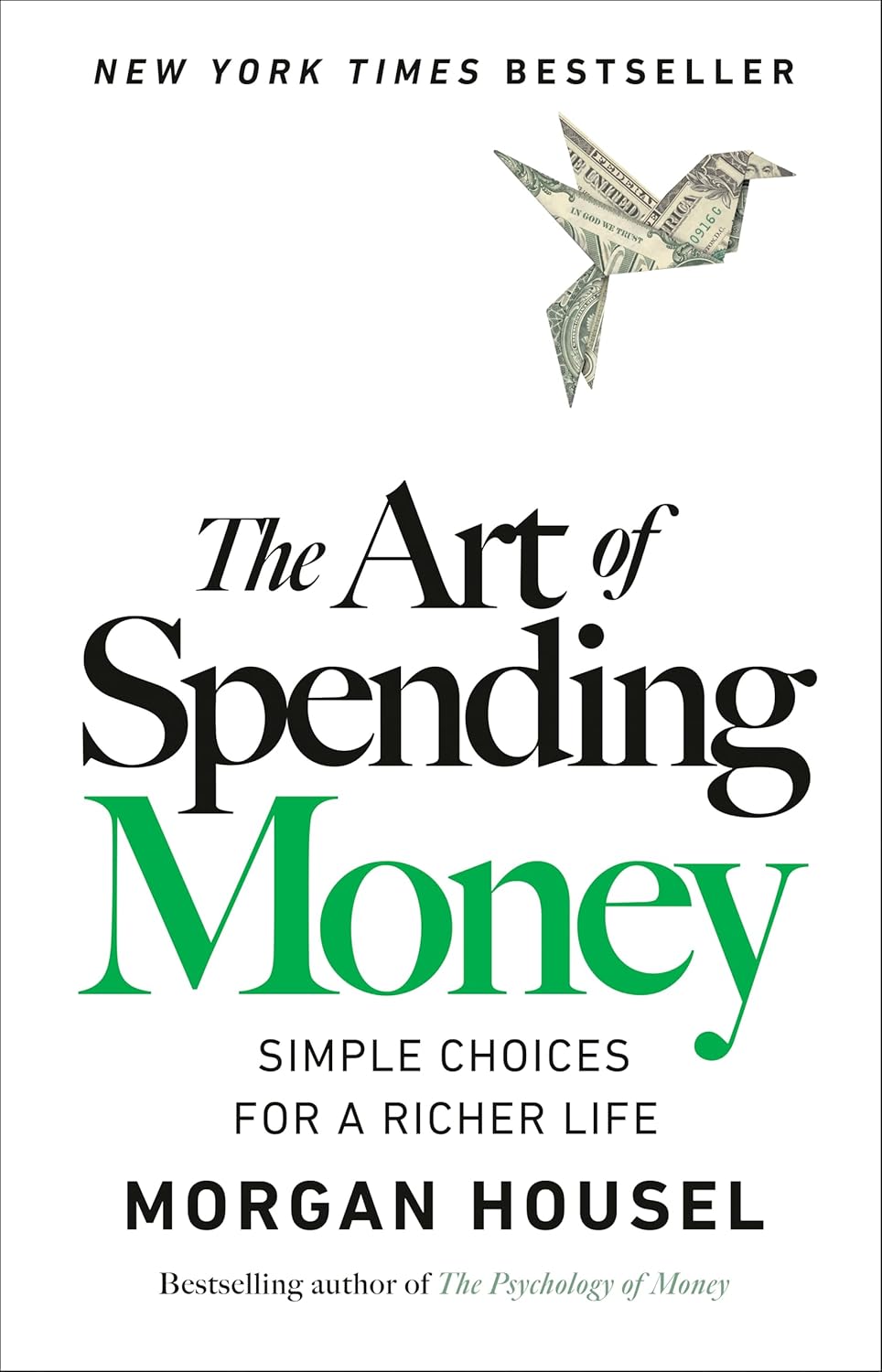
The Art of Spending Money
Wealth without freedom is a unique form of poverty.
Essence (why this landed for me)
A clear reminder to spend on what actually matters: people, time, and freedom. The through line is restraint and intention. Money is a tool for independence rather than performance. Keep expectations in check, choose utility over status, and let simple choices compound.
Insights (mapped to mental models)
Takeaways grouped by mental models, with a short action you can use now.
Plan life backwards with a reverse obituary
Happiness tracks contentment more than income
Status games are expensive and empty
Independence is a spectrum you climb
Memories compound like assets
Measure wealth in control of time
Lower expectations increase returns to life
Social debt can be costly
Small frictions beat big budgets
Write rules that fit your season
Absorption Notes (short essay)
Spend to buy time and autonomy first. Put family and relationships at the center of the plan. A simple way to stay on track: write the reverse obituary, then design money choices that support it. Keep expectations modest so satisfaction has room to grow. Choose utility over performance. Add friction before big buys. Trade some money for experiences that will matter in ten years. Reduce fixed expenses to climb the independence spectrum. Protect open time on the calendar; that is the dividend you are after.
Reflection Prompts (product × design × engineering)
Questions to apply the ideas across projects. Pick one or two and use them today.
Reverse obituary
What would I want said about my use of time and money
InversionWrite it.
Contentment check
Which expectation can I lower to raise my baseline
Expectations ManagementPick one.
Utility over status
Does this purchase help my work or just my image
Status GamesBe honest.
Independence step
What fixed cost can I trim this month
OptionalityCut one.
Memory buy
What experience will compound in value later
CompoundingSchedule it.
Autonomy block
Where can I add two uninterrupted hours next week
Time ArbitrageBlock it.
Friction rule
What delay can I add before nonessential purchases
Choice Architecture24 hours.
Season fit
Which rule no longer fits this stage of life
Second-Order ThinkingUpdate one.
Opportunity cost
What am I giving up by saying yes to this
Opportunity CostName it.
Expectation test
Would this still feel right if no one knew
Intrinsic vs Extrinsic MotivationTest it.