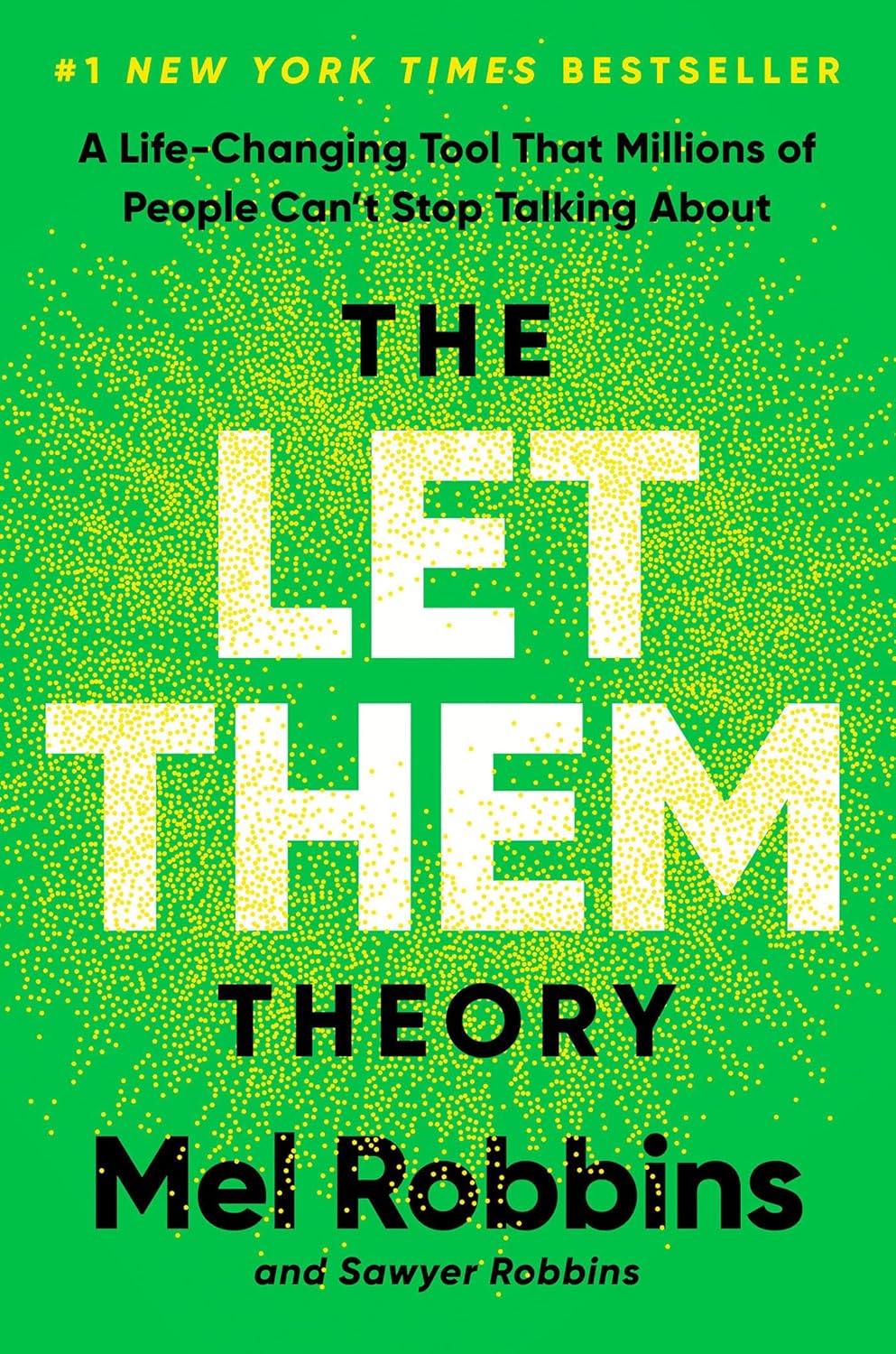
The Let Them Theory by Mel Robbins

The Let Them Theory

Mel Robbins

Format: Print/Audio Personal Score: 9.1 / 10

Let people be who they are; focus your energy on what you can do next.

Essence (why this landed for me)

This is a practice for peace and focus. Stop trying to manage other people’s choices and move your effort to what you can control. When I do that, attention returns, decisions get simpler, and progress speeds up. The work is small moves done consistently: clean boundaries, clear requests, and then letting outcomes teach.

Insights (mapped to mental models)

Takeaways grouped by mental models, with a short action you can use now.

Control the controllable, release the rest

ACTION Decide my part, write it down.
HOW IT SHOWS UP IN THE BOOK The core move is redirecting attention from others’ choices to my next step.
MENTAL MODELS Circle of Control★
MODEL CLUSTER Human Judgment & Bias

Boundaries are commitments, not threats

ACTION State it once, follow through.
HOW IT SHOWS UP IN THE BOOK Set clear standards for access, time, and response, then act consistently.
MENTAL MODELS Commitment Devices, Principles
MODEL CLUSTER Growth & Focus

Attention is a budget; spend it where it compounds

ACTION Move one unit back to build.
HOW IT SHOWS UP IN THE BOOK Stop funding control loops; fund design, craft, and health instead.
MENTAL MODELS Opportunity Cost★, Compounding
MODEL CLUSTER Growth & Focus

Let consequences teach when advice cannot

ACTION Stop rescuing patterns.
HOW IT SHOWS UP IN THE BOOK Natural feedback shapes behavior better than repeated persuasion.
MENTAL MODELS Second-Order Thinking, Skin in the Game
MODEL CLUSTER Systems & Adaptation

Replace mind reading with simple questions

ACTION Ask, do not assume.
HOW IT SHOWS UP IN THE BOOK Drop stories about motives; check reality with one direct question.
MENTAL MODELS Map ≠ Territory, Communication Loops
MODEL CLUSTER Logic & Reasoning

Accept base rates of human preference

ACTION Update when shown.
HOW IT SHOWS UP IN THE BOOK Believe what people do twice; stop designing for who they are not.
MENTAL MODELS Base Rates, Bayesian Updating
MODEL CLUSTER Logic & Reasoning

Choose response latency to reduce reactivity

ACTION Wait 24 hours if non-urgent.
HOW IT SHOWS UP IN THE BOOK Time gap softens spikes and improves judgment.
MENTAL MODELS System 1 ↔ System 2, Impulse Control
MODEL CLUSTER Human Judgment & Bias

Trade control for optionality

ACTION Open a new path.
HOW IT SHOWS UP IN THE BOOK Instead of forcing a change, create an alternative that works without buy-in.
MENTAL MODELS Optionality★, Choice Architecture
MODEL CLUSTER Growth & Focus

Reduce sunk-cost conversations

ACTION Stop paying attention there.
HOW IT SHOWS UP IN THE BOOK End cycles that never change outcomes; reclaim hours.
MENTAL MODELS Sunk Cost, Opportunity Cost★
MODEL CLUSTER Human Judgment & Bias

Turn complaints into clear requests

ACTION Ask for what I want.
HOW IT SHOWS UP IN THE BOOK Swap venting for a specific, doable ask with a time frame.
MENTAL MODELS Assertiveness, Negotiation Basics
MODEL CLUSTER Logic & Reasoning

Choose environment over argument

ACTION Change the room.
HOW IT SHOWS UP IN THE BOOK Set defaults and contexts that make the right action easier.
MENTAL MODELS Incentives, Choice Architecture
MODEL CLUSTER Systems & Adaptation

Define non-negotiables in advance

ACTION List my three standards.
HOW IT SHOWS UP IN THE BOOK Pre-commit to protect sleep, work blocks, and values.
MENTAL MODELS Principles, Commitment Devices
MODEL CLUSTER Growth & Focus

Stop scorekeeping; end hidden contracts

ACTION Remove the tally.
HOW IT SHOWS UP IN THE BOOK Unstated trades create resentment; state terms or let them go.
MENTAL MODELS Game Theory, Reciprocity
MODEL CLUSTER Human Judgment & Bias

Use small exits with kindness

ACTION Say thanks, not for me.
HOW IT SHOWS UP IN THE BOOK End misaligned loops without drama; protect future options.
MENTAL MODELS Reputation Effects, Optionality★
MODEL CLUSTER Growth & Focus

Measure progress by alignment, not control

ACTION Track time in my lane.
HOW IT SHOWS UP IN THE BOOK More hours in controllables is the leading indicator.
MENTAL MODELS Leading Indicators, Feedback Loops
MODEL CLUSTER Systems & Adaptation

Absorption Notes (short essay)

Start by writing what is mine to control and what is not. Move attention back to my side whenever I feel the pull to manage someone else. Turn complaints into clear requests with a time frame, then let outcomes teach. Keep a few non-negotiables to protect sleep, deep work, and health. Use a 24-hour delay for any heated reply that is not urgent. Design context instead of arguing for it. Change the room, the defaults, or my calendar so the good path is easier. Close sunk-cost loops that never change. When advice stops working, allow consequences to do their job. Track alignment as progress: more hours in controllables, fewer in persuasion loops. Kind exits keep doors open. Simple moves, steady rhythm.

Reflection Prompts (product × design × engineering)

Questions to apply the ideas across projects. Pick one or two and use them today.

My side of the line

What is within my control in this situation

Circle of Control

Write my part only.

Clean boundary

What boundary do I need to state once and keep

Commitment Devices

Say it, then act.

Attention budget

Where can I move attention from control to creation

Opportunity Cost

Reallocate one block.

Let it teach

Where should I stop rescuing and let feedback work

Second-Order Thinking

Stand back once.

Ask, not assume

What single question would replace my story about this

Map ≠ Territory

Reality check.

Update belief

What have their actions shown me twice already

Base Rates

Believe the pattern.

Delay the spike

Can this reply wait 24 hours to cool

Impulse Control

Pause if non-urgent.

Create options

What new path can I open that does not need their buy-in

Optionality

Design an alternative.

End the loop

Which conversation is sunk cost and should end now

Sunk Cost

Stop paying attention.

Non-negotiables

Which three standards do I protect this week

Principles

List them now.

Quotes (anchors; verbatim)