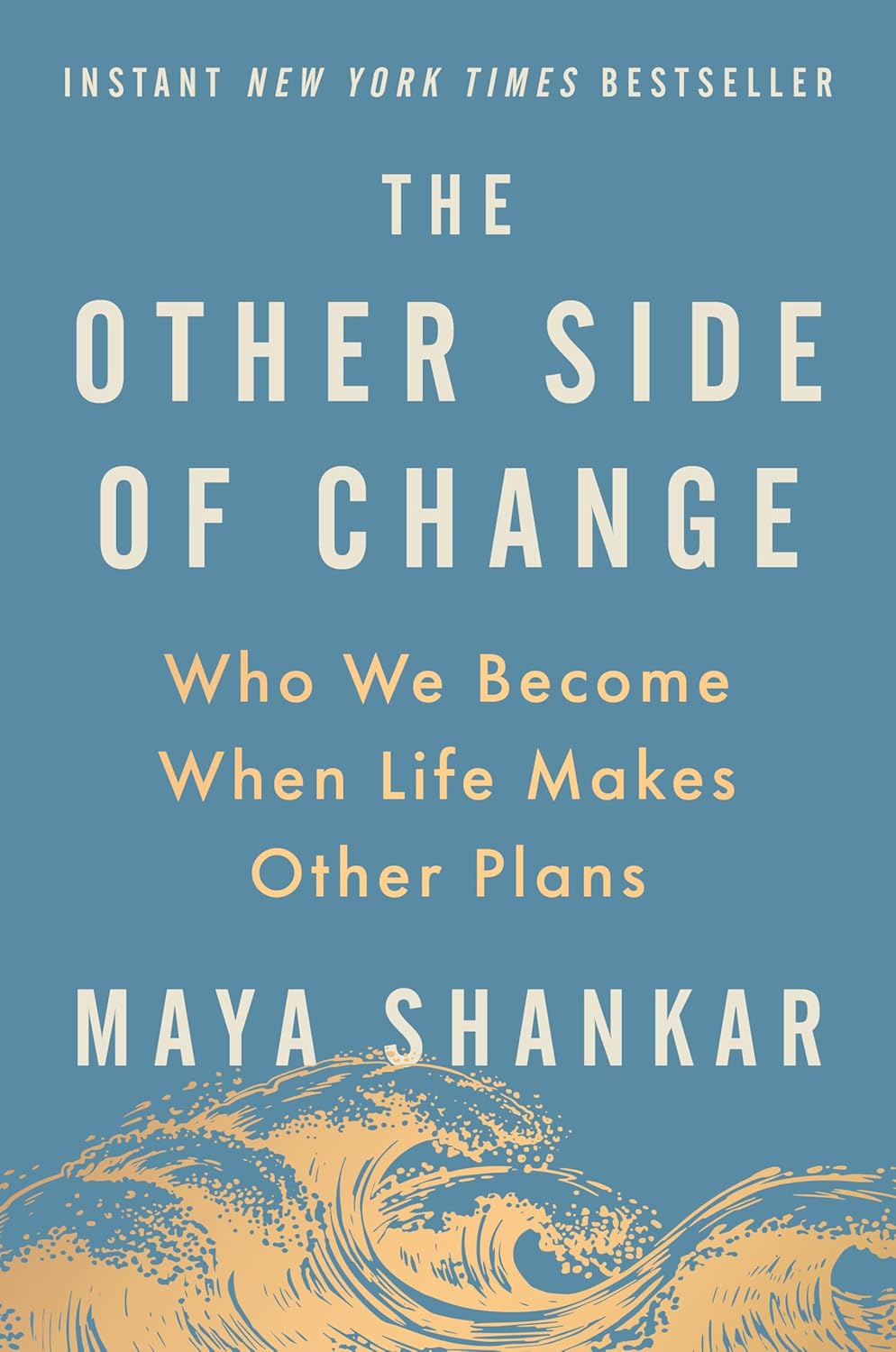
The Other Side of Change
Who might I become because of this, not just how do I get through it.
Essence (why this landed for me)
An easy, reflective read that reframes disruption as identity work. The central shift is simple: when change happens to us, it also creates change within us, and the person who emerges is someone we could not have planned for. That idea applies directly to teams, roles, and strategy. The Change Survival Kit in the appendix is genuinely useful, distilling each chapter into evidence-based tools I want to keep within reach. It pushed me to check where I anchor identity, to what I do or why I do it, and to notice when I am restoring a past state instead of exploring what the new one makes possible.
Insights (mapped to mental models)
Takeaways grouped by mental models, with a short action you can use now.
Anchor identity to why, not what.
Denial buffers short-term, costs long-term.
Self-affirmation lowers the threat by widening the lens.
Ask who else can this person be.
Moral elevation expands what you believe is possible.
Rumination feels like progress but is a closed loop.
Distance breaks the spiral. Zoom out.
Strategic distraction is a legitimate tool.
Label the emotion to stop being it.
Attachment styles are malleable in adulthood.
Treat beliefs as hypotheses. Test them.
Just-world thinking turns bad luck into self-blame.
Self-compassion depersonalizes the pain.
We underestimate how much we will change.
Community reinforces identity when you doubt it.
Fresh starts make timing a tool for change.
Absorption Notes (short essay)
Notice when the instinct is to restore the previous state after a shift. Pause and ask what the new state makes possible instead. Check the identity anchor: am I attached to what I do or why I do it? Roles change. The why is more durable. When ruminating, label the specific emotion, write the situation in third person, or switch to a healthy distraction. Any of those breaks the loop. Keep the end of history illusion close: the person navigating the change will not be the person who started it, and that is an advantage. Use the Change Survival Kit as a reference during hard transitions. Find or build a community that believes in the next version. Start new practices at clean boundaries, Mondays, new months, transitions, so the fresh start effect works in your favor. Simple moves, steady rhythm.
Reflection Prompts (product × design × engineering)
Questions to apply the ideas across projects. Pick one or two and use them today.
Identity anchor
Is my team's identity tied to what we build or why we build it
First PrinciplesStart with why.
Denial scan
Where am I minimizing a situation that deserves full attention
InversionCheck for avoidance.
Possible selves
If this role ended tomorrow, what three things could I become
OptionalityList skills, not titles.
Rumination check
Am I looping on this problem or actually making progress
Feedback LoopsSet a timer.
Emotion label
What specific emotion am I feeling right now
System 1 ↔ System 2Name it.
Belief test
What evidence would change my mind about this assumption
FalsificationHunt for the counter.
Locus check
What part of this outcome did I actually control
Circle of ControlDraw the circle.
Fresh start
What new practice would benefit from a clean beginning this week
Activation EnergyPick a date.
Community
Who around me believes in the version I am becoming
Social CapitalInvest there.
End of history
How different am I from five years ago, and what does that imply about five years from now
Scenario PlanningProject forward.